
The Future of Design Review in Cincinnati
City Councilmember Seth Walsh initiated AIA Cincinnati’s Urban Design Committee’s March program about the past and potential future of design review boards in Cincinnati. The panelists included Daniella Beltran (Vice Chair of Cincinnati’s Planning Commission and project manager for YARD & Co, educated in architecture as well as planning), Dick Rosenthal (a business leader and advocate for the arts who served as the Chair of the City of Cincinnati Urban Design Review Board), Ray Gastil (Professor of Urban Design at the University of Washington in Seattle and the Commissioner of Seattle’s Urban Design Review, as well as the former Director of Planning for Seattle, Pittsburgh, and for the Department of Community Planning in Manhattan), and Mr. Walsh (who, prior to being elected to City Council, served as the Executive Director for the College Hill Community Urban Redevelopment Corp).
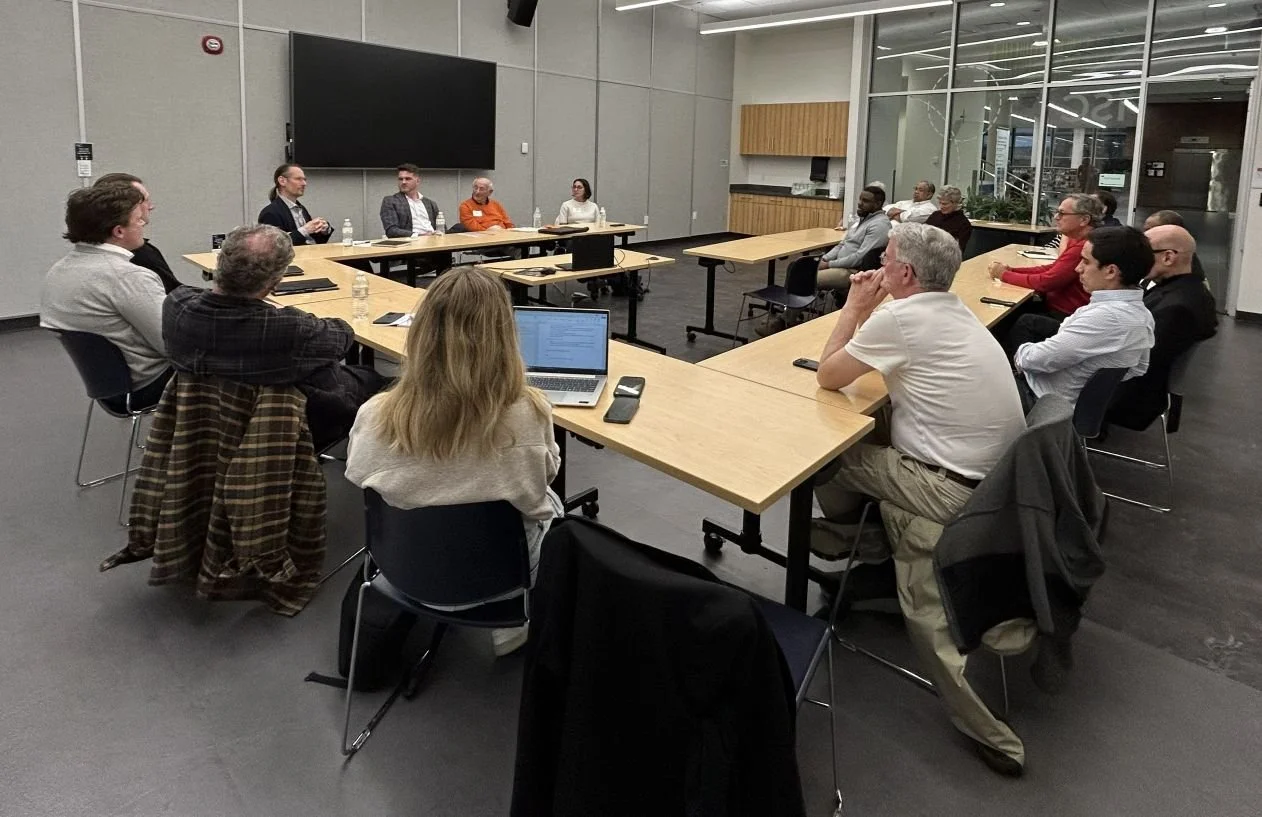
Photo credit: AIA Cincinnati
To kick off the program, Councilmember Walsh explained his interest in re-examining the role of design review. Specifically, including design review in the City’s process in approving new projects that rely on some form of public subsidy, such as grants or tax-increment financing. Further, as the City examines the role and responsibilities of the Office of Strategic Growth and evolving role of Planning Commission, there is a desire to actively encourage quality design. Many exciting opportunities for growth could fulfil the City’s desire to increase and better serve residents at all income levels. New initiatives such as the intentional density of Connected Communities, improved transit in established neighborhoods, and the possible reinvention of Queensgate and the West End, would benefit from a speedier and consistent development process. Simply put, as other peer cities offer a more predictable process and more collaborative community engagement, maintaining the status quo in Cincinnati could reduce our attractiveness for investment, ultimately negatively impacting our community’s vibrancy and economic development.
Mr. Rosenthal shared the history and foundational intent of Cincinnati’s Urban Design Review Board (UDRB), which operated from the 1960s into 2020, but is now dormant. UDRB, composed of architects and civic leaders, was intended to collaborate with developers of projects (public and private) to provide insight and peer review to designers of new structures and environments in the urban heart of the city. In many cases, insight was welcomed by the design team, even reducing project costs, and leading to appreciation of the built context, even when the new building itself may have been in contrast. As the review process evolved, UDRB felt the applicants’ designs were too developed for the review to be helpful, and the willingness of developers to consider UDRB feedback was limited or taken defensively, even if otherwise valuable.
Ms. Beltran described a similar feeling: that contemporary Planning Commission reviews happen too late in the design process. It's also worth Planning Commission’s current role is not specific to Design Review, as previously performed by UDRB. If brought in earlier, or with amended responsibility or participants, design review could be included among good planning principles and zoning insights being applied. Although the Planning Commission participates in reviewing zoning variance requests and establishing PD zoning regulations, projects that navigate by-right development would also benefit from review by this valued panel of experts.
Mr. Gastil shared Seattle’s design review process, which is currently being expanded to include all neighborhoods under the same review body for consistency but focusing on only larger projects to manage capacity. Projects will receive a single hearing, which is intended to streamline the process; the new system has yet to demonstrate the accountability or impact of such feedback. Mr. Gastil described the value of the peer-to-peer review process used by Pittsburgh’s Contextual Design Advisory Panel (CDAP) which also encourages communication among designers as a constructive benefit to the city.
The panel and audience recognized that the perception of the UDRB could be mixed when it was actively engaged in reviews of new development. Some developers and City staff believed review by UDRB, or additional requested hearings, was cumbersome. It was important that the UDRB was an apolitical body, without influence by political donations or access to elected officials, nor permitted to be addressed other than in a collective. When reviews happened late in the design process, UDRB’s commentary was sometimes limited to material colors, rather than design principles, which could be interpreted as personal opinions instead of alignment with Guiding Principles of the City or specifically adopted plans.
If Cincinnati is to be an attractive city in which to invest, by developers and established institutions, then predictability and consistency of the development and review process is helpful. Transparency is equally beneficial for those who will be impacted by their proximity to new development and construction projects. This could go as far as requiring a Community Benefits Agreement or letter of support from the local Community Council, as part of the review process. Done well, all of these would be valuable in establishing a higher level of trusting relationships between residents, developers and designers, and appointed and elected officials.
Engaged and constructive dialogue about design should be part of the review process, along with an early-stage Coordinated Site Review and subsequent adherence to zoning and building codes. That could be achieved by re-establishing a dedicated Design Review Board made up of highly qualified and objective design-oriented voices within City departmental administration, or by making existing Boards or review processes more robust in their advisory roles.
As a city, Cincinnati is getting many things right, but we are not without challenges. The demands of meeting housing quality and quantity needs, attracting business and new employment opportunities, and the desire to create safe and vibrant neighborhoods of choice means the pace of change will likely increase. AIA Cincinnati’s Urban Design Committee is excited to kick off this discussion and look forward to continuing the conversation as the City strives to work faster and better to bring high-quality design and development to Cincinnati.
Be part of the conversation by joining the conversation on the Urban Design LinkedIn group or attending an upcoming Urban Design Committee meeting.